Mostrar mensagens com a etiqueta * Galeria. Mostrar todas as mensagens

quarta-feira, 4 de abril de 2012

Tito Rodriguez


Tito Rodriguez at the Palladium Ballroom, NYC image by Chuck Stewart


segunda-feira, 5 de março de 2012

Birdland club

First, the picture — from the Bettmann / Corbis archives: 
the original jazz club Birdland, perhaps on opening night in 1949.  
From the left, Max Kaminsky on trumpet, Lester Young on tenor saxophone, a nearly-hidden George Wettling on drums, Hot Lips Page on trumpet, Charlie Parker on alto saxophone, Lennie Tristano on piano.

quinta-feira, 15 de dezembro de 2011

The Cellar Jazz Club

Joe Gordon on trumpet, Jerry Fuller on drums, Freddy Scheiber on bass, Bob Nixon on piano
Harold Land 1960 with Joe Peters on drums and Clarence Jones on bass
Harold Land on tenor sax and Amos Trice on piano - bill boyle album
(lt-rt) Don Friedman, Ben Tucker, Billy Higgins, Don Cherry, Ornette Coleman, Nov. 1957.
Photo courtesy of Wally Lightbody
Ornette Coleman, Ben Tucker, bass (hidden) and Billy Higgins. Photo courtesy of Wally Lightbody

You better read the devoted blog The Original Cellar Jazz Club in Vancouver.

...

terça-feira, 6 de dezembro de 2011

Strange Fruit


This is a new split-second capture from a famous jazz session and photo shoot: the Commodore Records session of April 20, 1939, where Billie Holiday recorded STRANGE FRUIT, YESTERDAYS, I GOTTA RIGHT TO SING THE BLUES, and FINE AND MELLOW. The musicians are bassist Johnny Williams, trumpeter Frank Newton, altoist Stanley Payne, and tenorist Kenneth Hollon. Billie is holding a long-noted syllable; is it the “Yes” in YESTERDAYS? And she is very young, very beautiful, also giving herself up to the music, her hands folded, her eyes almost-shut, Peterson’s lighting capturing her mouth, chin, and throat. What distinguishes this portrait from others at this session is Billie’s lovely and obviously-treasured fur coat. I find it ironic, seventy years after the session, that there is such a gap between Billie in her fur — which she deserved more than anyone — and the material she sings with such deep emotion. One song, most famous, describes lynchings in the South; another describes a “fine and mellow” lover who doesn’t treat his woman well; a third and fourth describe bygone happinesses, all gone now, and the blues one sings when one’s lover has left. And Billie sang these four songs as if her heart would break . . . wearing that fur coat. Later in the session, of course, she got warm and took it off. And no doubt the irony didn’t occur to her and she would have laughed it off if someone pointed it out, “Lady, you look too good to be singing those blues!”
from JAZZ LIVES : CHARLES PETERSON’S VISION


Strange Fruit

Southern trees bear a strange fruit,
Blood on the leaves and blood at the root,
Black body swinging in the Southern breeze,
Strange fruit hanging from the poplar trees.

Pastoral scene of the gallant South,
The bulging eyes and the twisted mouth,
Scent of magnolia sweet and fresh,
And the sudden smell of burning flesh!

Here is a fruit for the crows to pluck,
For the rain to gather, for the wind to suck,
For the sun to rot, for a tree to drop,
Here is a strange and bitter crop.

quinta-feira, 1 de dezembro de 2011

Remember Small's Paradise

Small's Paradise Nightclub, 1940

A long-running Harlem jazz club, closed in 1986

Today's jazz clubs could take some notes from their early predecessors since the bright lights, style and joi de vivre is definitely an element missing (except for maybe Lenox Lounge). Small's Paradise was one of the top ballroom and Jazz clubs of Harlem that provided glamour and music to famous locals and visiting revelers from lower Manhattan. Opened in 1925 by Ed Small during a time of Prohibition, Small's was a sort of hot and heavy speakeasy that downtowners in the know would come to for a night of Jazz, dancing and drink. The club was one of the first to have an open door policy so the crowd also included Harlem's brightest luminaries and faithful locals.

Small's stayed open until 1986 with a brief ownership by Wilt Chamberlain. Nowadays, the Thurgood Marshall Academy has taken over the structure in which the Charleston was once famous. Today, instead of dancing feet, pancakes are being flipped at a house of pancakes that has moved into the street level space of the building. The Small's Building is at 2294 Seventh Avenue/Adam Clayton Powell at 135th Street.


Small‘s Paradise jazz club in Harlem, c. 1928.
Courtesy of the Frank Driggs Collection.

Gerry Mulligan and Chet Baker


Gerry Mulligan and Chet Baker, November 1974 during rehearsal for concert at Carnegie Hall "Reunion with Chet Baker". Organized by Don Friedman.
Photographs by Franca R. Mulligan


Chet Baker & Gerry Mulligan : El Viento Sagrado
por Diego Fischerman


Sidney Bechet


Portrait of Sidney Bechet, Freddie Moore, and Lloyd Phillips, Jimmy Ryan's (Club), New York, N.Y., ca. June 1947
photography by William P. Gottlieb

The Library of Congress

domingo, 27 de novembro de 2011

Paul Motian


Stephen Paul Motian
(25 March 1931 – 22 November 2011)

© All rights reserved by etaway
wikipedia

sexta-feira, 18 de novembro de 2011

What Is Jazz?


       “Words are the children of reason and, therefore, can’t explain it. 
       They really can’t translate feeling because they’re not part of it. 
       That’s why it bugs me when people try to analyze jazz as an intellectual theorem. 
       It’s not. It’s feeling“

           Bill Evans, jazz pianist (1929-1980)


segunda-feira, 14 de novembro de 2011

Stan Getz at Greenwich Village's Cafe Au Go Go


Stan Getz with Antonio Carlos Jobim and Astrud Gilberto
during the historic Greenwich Village's Cafe Au Go Go engagement

sexta-feira, 11 de novembro de 2011

“Mingus On Mingus”

Kickstarter Campaign for "Mingus On Mingus": a project documentary

Orangethenblue starts a Campaign to raise funds for filming a Charles Mingus documentary directed by his grandson Kevin Ellington Mingus. For more information go to Kickstarter Campaign for "Mingus On Mingus" to contribute. They even are open for suggestions and any help is important to keep the project moving forward. The goal is to raise $45,000 in 40 days until 18 dec.
To find more info about the documentary go to www.orangethenblue.com


"A grandson’s journey through the lore and legends of jazz history to find his grandfather, Charles Mingus he never knew
... . ...
There are many perspectives of my grandfather that have not had a place in defining his legacy…
I am seeking them out to understand him beyond myth, fable or a singular vision of his work.
We have begun to create a platform where we can use the ideals of jazz in the art of making a film
"
~ Kevin Ellington Mingus


SUPPORT this PROJECT by clicking here


quarta-feira, 26 de outubro de 2011

Lennie Tristano At The Cafe Bohemia

from L to R: Bill Harris, Denzil Best, Flip Phillips, Billy Bauer, Chubby Jackson, Lennie Tristano
The Pied Piper (Later Café Bohemia), New York, August 22, 1947.

terça-feira, 18 de outubro de 2011

Stolen Moments: The Monterey Jazz Festival

Johnny Hodges in 1960
Miriam Makeba in 1960 singing "Evolution of the Blues. She had just come from South Africa
Duke Ellington and Paul Gonsalves in 1960. The photo was taken during one of Paul's extended solos.
Monk, Dizzy Gillespie, and Gerald Wilspn backstage in 1963
Miles Davis having a cigarette lit by Harry James on the backstage in 1963
Miles Davis and Steve McQueen on backstage in 1963
Mingus in 1964
Monk in 1964
Teddy Edwards in 1964
Louie Bellson in 1966
Duke Ellington, 1966
Arranger and Composer Gil Evans in 1966; Evans was warming up in a large rehearsal hall backstage
Jackie McLean in 1966
Elvin Jones in 1966
Woody Herman in 1966 or 1967

photos were taken by Jim Marshall using his Leica M4

domingo, 2 de outubro de 2011

David Murray

terça-feira, 20 de setembro de 2011

Billie Holiday at the Storyville Club 1951

Billie singing into the mike at the George Wein's Storyville Club in the Copley Square Hotel in Boston. Sharing the same bill with the Stan Getz Quintet.

28 october 1951, Storyville Club, Copley Square Hotel, Boston
Radio Broadcast from WMEX

sábado, 17 de setembro de 2011

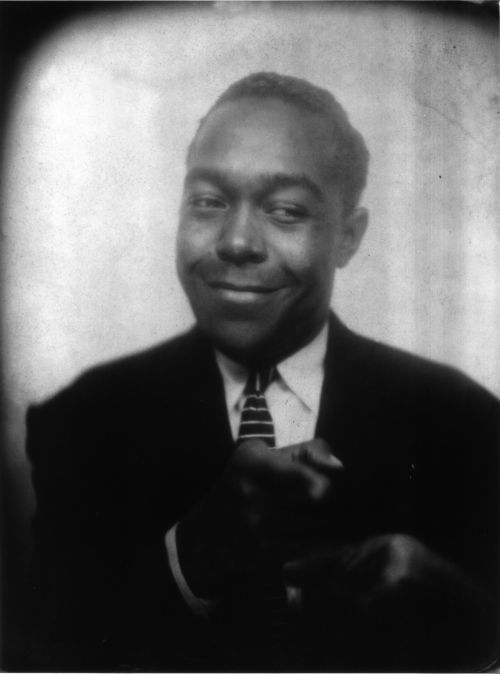
Charlie Parker

charlie147.jpg
Charles Parker, Jr.
(August 29, 1920 – March 12, 1955)


segunda-feira, 12 de setembro de 2011

Charles Lloyd Quartet

Charles Lloyd Quartet.jpgCharles-Lloyd-Quartet.jpg

sábado, 10 de setembro de 2011

Miles

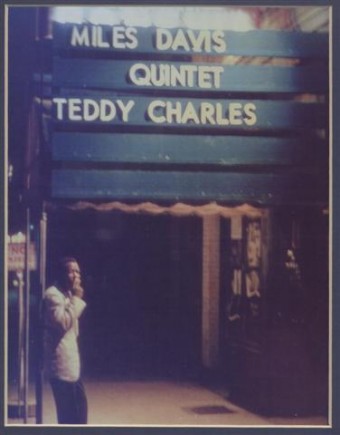
Miles Davis at the Cafe Bohemia, Manhatten, 1955.jpeg
Miles Davis at the Cafe Bohemia, Manhattan, 1956

quinta-feira, 8 de setembro de 2011

The Café Bohemia

Read A Vintage Article About Café Bohemia

A June 13, 1956 Village Voice article describes the club’s origins as a jazz spot:

“First Birthday for Jazz Club That Started ‘by Accident’”

What Jimmy Garofolo, 42, knew about progressive jazz one year ago wouldn’t have filled a single bar – of music. What he’s learned since, however, was filling his bar – the Cafe Bohemia – every night last week, when the nightspot celebrated its first anniversary as a jazz club.

Seating only 100, the tiny Barrow Street club has become the only place in America with a policy of “progressive jazz only.”

“No rock ‘n roll, no vocalists, no big bands, no nuttin’ except small jazz combos,” Garofolo told The Voice Sunday [June 10, 1956]. “Once Birdland and Basin Street were the mecca of all true jazzmen; now a lot of them won’t go on the road until they’ve played the Bohemia, too. We’re a small place and we’ve given many a new outfit their first chance.”

Half a dozen LP record albums have been cut on the premises during the past 12 months, and their covers, along with others, line the walls in symmetrical rows. They include covers by the Bohemia’s two current stars – Miles Davis and Teddy Charles.

The fact that the Bohemia ever turned into a jazz club in the first place is almost accidental. Owner Garofolo, a lifelong Villager who lives across the street from his bar, explains: “For six years I tried to make the place pay, first as a bar and restaurant, then with girly shows, and then with various acts. One night I had to throw out a character who’d been drinking brandy alexanders without any money to pay for them. The next thing I knew, he was back offering to play a few weeks here to pay off his obligation – and because he wanted a regular home base from which to play when he was between engagements.

Guess Who? “Somebody told me his name was Charlie Parker and he was a saxophonist. I was pretty naive about jazz at the time and I didn’t know him from beans, but it turned out he was a big man in the jazz world.

“When I put out signs announcing he was going to play, I had a stream of people coming in wanting to know if the great Charley Parker was going to play here. It was the way they said ‘here’ that got me.”

The great Charley Parker never did get around to playing the Bohemia; he died before his engagement came up. But his prestige had done the trick – jazzophiles have jammed the place ever since.

According to Panken’s 2005 Downbeat article, Charley Parker began frequenting the Bohemia because he was staying at the apartment of poet Ted Joans, across the street. Joans is said to have coined “Bird lives!”, the phrase that caught on after Parker’s death in 1955. Joans also wrote the poem “Jazz Is My Religion.”

***


Now a local bar, this place used to be Cafe Bohemia. Cannonball Adderley made his New York debut here. He was 26 years old at the time, just left a job teaching high schools in Florida, and come to get his Masters degree at NYU. In his first night in New York, him and his brother, Nat Adderley, went down to Cafe Bohemia and played through a couple of tunes. Oscar Pettiford and Charlie Rouse were there that night, and were so impressed by the two brothers that they gave the them both jobs two nights later. The two would go on to record some of the most important jazz albums in history. ~ chasingred- TOUR OF NEW YORK'S JAZZ HISTORY, PART 1

quinta-feira, 9 de junho de 2011

Chet Baker in St. Louis

Picture For Your Exhibition
chet baker.jpg
Chet Baker in St. Louis
by Joe Schwab


Here's a shot of a very young Chet Baker, taken here in St. Louis at The Glass Bar (Peacock Alley). I'm guessing this is right around 1956, shortly after Chet had returned from his first trip to Europe, resulting in the untimely overdose death of pianist Dick Twardzik. Pictured here along with Chet are tenor player Phil Urso, drummer Lawrence Marable and I'm guessing Carson Smith. Maybe someone out there can verify this. The photo was taken by Bernie Thrasher.