domingo, 2 de outubro de 2011

Chet Baker & Lee Konitz In Concert [1974]

Chet Baker & Lee Konitz - In Concert

India Navigation IN 1052 - Released: 1974

Live Recording at "Ornette's Club", Woodstock, NY, April, 1974


Chet BakerTrumpet, Lee Konitz Alto Saxophone,Michael Moore Bass,Beaver Harris
 Drums

1. Airegin (Sonny Rollins)
2. Au Privave (Charlie Parker)

3. Body And Soul (Oscar Micheaux)

4. Willow Weep For Me (Ann Ronell)

5. Walkin'


mediafire 94Mb

David Murray Quartet Live at the Lower Manhattan Ocean Club 1977

David Murray Quartet Live at the Lower Manhattan Ocean Club Vol.1& 2

India Navigation IN 1032 and IN 1044 - CD reissue IN 1032 CD


Recorded live at the Lower Manhattan Ocean Club, NYC December 31 1977

David Murray tenor sax, soprano sax on 2, Lester Bowie trumpet, Fred Hopkins bass, Phillip Wilson drums


vol 1

1. Nevada's Theme (David Murray) 11:23

2. Bechet's Bounce (David Murray) 7:32

3. Obe (Lawrence"Butch" Morris) 18:12

4. Let The Music Take You (David Murray) 3:36
vol2

1. For Walter Norris (Lawarence"Butch" Morris) 23:24
2. Santa Barbara And Crenshaw Follies (David Murray) 12:20


download
mp3s @320kbps

This post is a rip of a CD reissue of two LPs collecting together the music performed by a Murray led quartet at a Manhattan club on New Year's eve in 1977. You can almost smell the seafood in the club's name! It re-unites the rhythm section of Hopkins and Wilson from Murray's earlier India Navigation recording from eighteen months before, and adds Lester Bowie.

Bowie is the link between the three most powerful groupings of musicians who came together in New York in the late 1970s to transform the established free jazz movement into the new music scene. Bowie had been active in both St Lois and Chicago in the collectives that became BAG and AACM respectively, and here in New York he is one of the earliest to play with musicians, who like Murray had come from LA. Inspired by the Black Arts movement and the idea of musical collectives they had nurtured these ideas in major black communities in the US, but ultimately moved to new York, often after sojourns in Europe.

Bob Cummins was one of those jazz lovers and small-scale entrepreneurs who captured much of the vibrant energy of the scene on his India Navigation label in the 1970s. He seemed to earn his living as a lawyer, and spent it on recording live performances in the lofts and small venues, and then releasing the recordings. He died in September 2000, but small bursts of CD reissues seem to appear from time to time. Not sure why and how, but I'm always glad of the opportunity to listen to more. This one seems to be out of print as far as I can tell. It was certainly hard to find a copy when it was first re-released.

I haven't got the original vinyl LPs, but the CD liner notes say there's nearly seven minutes taken off 'Santa Barbara And Crenshaw Follies', and by my calculations there's possibly over two minutes less on 'For Walter Norris' if the timings on LP and CD can be believed (they can't usually). The CD notes also talk about an unreleased track. many of these tracks were staples of Murray's repertoire, and you get the usual personal dedications, rich textures and sometimes inspired themes. I'm very fond of this recording. I hope you enjoy it too.

David Murray

terça-feira, 27 de setembro de 2011

Lester Bowie's Brass Fantasy

Lester Bowie's Brass Fantasy - The Fire This Time
Released: 1992 | Label: In & Out | CD 1995

Recorded live on 1 May 1992 at the Moonwalker Club, Aarburg, Switzerland

Lester Bowie, Tony Barrero, E.J. Allen, Gerald Braxel – Trumpet, Frank Lacy, Luis Bonilla — Trombone, Vincent Chancey — French Horn, Bob Stewart – Tuba, Famoudou Don Moye – Percussion, Vinnie Johnson — Drums

    1.    "Night Time (Is the Right Time)" (Herman) - 2:54
    2.    "For Louis" (Wilson) - 7:13
    3.    "Journey Towards Freedom" (Allen) - 10:55
    4.    "Remember the Time" (Jackson) - 8:32
    5.    "Strange Fruit" (Lewis) - 9:15
    6.    "Siesta for the Fiesta" (Lunceford) - 4:14
    7.    "Night Life" (Purse) - 10:29
    8.    "Black or White" (Jackson) - 7:19
    9.    "Three for the Festival" (Kirk) - 6:06
   10.    "The Great Pretender" (Ram) - 7:33

 MP3 @320 kbps |  168.5 MB
Part 1 | Part 2

FLAC | 455 MB
Part 1 | Part 2 | Part 3 | Part 4 | Part 5

Thanks to Garina

terça-feira, 20 de setembro de 2011

Billie Holiday at the Storyville Club 1951

Billie singing into the mike at the George Wein's Storyville Club in the Copley Square Hotel in Boston. Sharing the same bill with the Stan Getz Quintet.

28 october 1951, Storyville Club, Copley Square Hotel, Boston
Radio Broadcast from WMEX

Billie Holiday & Stan Getz at "Storyville" 1951

HotBeatJazz 10' Series - Billie Holiday & Stan Getz - Billie And Stan 10'LP Dale LP 25 (1951)

Recorded live at "Storyville Club", Boston, MA, October 29, 1951
Billie Holiday (vo) Stan Getz (ts) Al Haig (p) Jimmy Raney (g) Teddy Kotick (b) Tiny Kahn (d)

1- You're driving me crazy
2- Lover come back to me
3- Ain't nobody's bizzness if I do

Recorded live at "Storyville Club", Boston, MA, October 31, 1951
Billie Holliday (vo) Buster Harding (p) John Fields (b) Marquis Foster (d)

4- He's funny that way
5- Miss Brown to you
6- Detour ahead
7- Billie's blues
8- Them there eyes

download


Thanks to hot beat jazz


sábado, 17 de setembro de 2011

Charlie Parker – Complete Bird at the Open Door (1953)

Live at the Open Door in Greenwich Village, N. Y. C., Sunday, July 26, 1953

Charlie Parker alto saxBenny Harris trumpetAl Haig pianoCharles Mingus bassArt Taylor drums

1. Out Of Nowhere 3:02
2. Star Eyes 3:53

3. Cool Blues 4:42

4. East Of The Sun 3:23

5. The Song Is You 6:06

6. 52nd Street Theme (I) 2:39

7. Ornithology 3:20

8. Scrapple From The Apple 3:26

9. My Old Flame 4:18

10. My Little Suede Shoes 2:17

11. I Remember You 3:03

12. All The Things You Are 4:13

13. Just You, Just Me 1:58

14. I’ll Remember April (I) 4:15

15. Hot House 3:21
16. 52nd Street Theme (II) 3:00

17. I Cover The Waterfront 2:27

18. This Time The Dream’s On Me 4:14

19. I’ll Remember April (II)

download
mp3@224kbps
REVIEW:

This is a recording by Bird’s wife Chan of a 4-set performance at the Open Door in Greenwich Village in July 1953. It’s mostly just the heads and Bird’s soloes and chases. The recording quality is reasonably good, at least by the standards of such amateur nightclub recordings. There’s lots of audience noise but Bird is easily heard, along with the drummer (Art Taylor). The pianist (Al Haig) and bassist (Charles Mingus) are often poorly audible. It’s a typical performance for Bird during the twilight of his career: virtuosity trumps inspiration. That’s not to say there’s no innovation: despite having heard so many of his soloes, I’m still amazed at how easily Bird inserts quotes in harmonically and rhythmically adventurous spots. But these moments are relatively few, and the overall impression is of someone trapped in his past, stitching soloes together from oft-repeated personal cliches. The lack of another horn on most of these tracks to provide a competitive stimulus may have contributed to the staleness. In fact, for someone who’s listened to a lot of Bird, some of these soloes are almost (dare I say it?) boring! Bird was by all accounts aware that he was in a musical rut: he talked of studying composition with Varese, for example; but he never progressed beyond the stage of endless reinvention of soloes on traditional vehicles like the blues and standard ballads. Other jazz greats faced a similar dilemma, and some were able to progress. For example, Duke Ellington wrote more extended concert pieces; Louis Armstrong became an ambassador of jazz, travelling for the State Department, and found some commercial crossover success late in his career; Miles Davis and John Coltrane never stopped exploring new musical frontiers. But Bird remained stuck, most likely because the demands and consequences of his heroin addiction got in the way. A little more than a year and a half after this recording he was dead, his career and home life in ruins. It’s sad to think what might have been.


Thanks to Raz - jazz is my life

Charlie Parker

charlie147.jpg
Charles Parker, Jr.
(August 29, 1920 – March 12, 1955)


quinta-feira, 15 de setembro de 2011

Jutta Hipp At The Hickory House 1956


Recorded at the "Hickory House", N. Y. C. in April 5 1956

Jutta Hipp piano Peter Ind bass Ed Thigpen drums
CD1
01. Introduction by Leonard Feather
02. Take Me in Your Arms
03. Dear Old Stockholm
04. Billie's Bounce
05. I'll Remember April
06. Lady Bird
07. Mad About the Boy
08. Ain't Misbehavin'
09. These Foolish Things
10. Jeepers Creepers
11. The Moon Was Yellow

CD2
01. Gone with the Wind
02. After Hours
03. The Squirrel
04. We'll Be Together Again
05. Horacio
06. I Married an Angel
07. Moonlight in Vermont
08. Star Eyes
09. If I Had You
10. My Heart Stood Still

Jutta Hipp At The Hickory House (1956) [2CD] {2007 Japan RVG, TOCJ-7041/42}
EAC rip (secure mode) | FLAC (image)+CUE+LOG -> 457 Mb | MP3 @320 -> 189 Mb
Full Artwork @ 300 dpi (jpg) -> 21 Mb
© 2007 Blue Note Japan | TOCJ-7041/42 | 24-bit remaster

FileSonic or FileServe
p.s. the files are interchangeable...

At the Hickory House is a thoroughly appealing collection of lightly swinging small-combo jazz that draws equally from hard bop and soul-jazz. There's a soulful lilt to Jutta Hipp's playing that keeps it engaging and enjoyable. The rhythm section of Peter Ind (bass) and Ed Thigpen (drums) largely stay out of the way, letting Hipp dictate the tempo and mood of the pieces, and she has a knack for creating infectious, swinging interpretations of jazz and pop standards that are enjoyable and easy to listen to. Vol. 1 contains such staples as "Dear Old Stockholm," "Billie's Bounce," "Mad About the Boy," "Ain't Misbehavin'" and "These Foolish Things," all of which are performed with verve and style, making the record a wonderful little gem.

Jutta Hipp at the Hickory House, Vol. 2 has the same infectious spirit and sense of fun as the first volume. Taken from the same date, this ten-track album features such standards as "Moonlight in Vermont," "After Hours," "If I Had You" and "My Heart Stood Still," all of which are given swinging, spirited interpretations by Hipp and her rhythm section of bassist Peter Ind and drummer Ed Thigpen. As with the first volume of At the Hickory House, Vol. 2 is another thoroughly enjoyable set of swinging soul-jazz and should appeal to fans of Horace Silver and the Three Sounds.


Thanks to ruskaval

quarta-feira, 14 de setembro de 2011

The Jazz Crusaders Live Newport & Pacific Jazz Festivals 1966

The Jazz Crusaders Live Newport & Pacific Jazz Festivals – The Festival Album 1966

Recording information:
Pacific Jazz Festival, Costa Mesa, CA (1966)
Newport Jazz Festival, Newport, RI (1966)
Shelly's Manne-Hole, Los Angeles, CA (1968)

The Jazz Crusaders:
Wilton Felder saxophone, tenor saxophone Wayne Henderson trombone Joe Sample piano, keyboards Stix Hooper drums
on double bass
Herbie Lewis (Pacific Jazz Festival), Jimmy Bond (Newport Jazz Festival), Buster Williams (Shelly Manne's Hole)

01. Introduction
at the Pacific Jazz Festival

02. Trance Dance
03. Summer’s Madness
at the Newport Jazz Festival

04.
Young Rabbits
05. Freedom Sound
at Shelly Manne's Hole

06.
Wilton’s Boogaloo
07.
Half And Half

The Festival Album was the only live set by the Jazz Crusaders not recorded at the Lighthouse. As such, it is a compilation of performances recorded at the Pacific Jazz and Newport Festivals in 1966. The band had two different bass players during these gigs: Jimmy Bond was at the Newport Festival, while Herbie Lewis joined for the Pacific Jazz Festival. The band was well established everywhere but in New York, bewilderingly, and had recorded a dozen records, all of which were popular. And it's easy to see why. The version of Ken Cox's "Trance Dance" that opens the set showcases all of the band's strengths: solid hard bop chops and arrangements with a deep accent on the blues as it was emerging into soul-jazz. Soloists Joe Sample, Wayne Henderson, and Wilton Felder are all in fine form here. The deep groove on "Summer's Madness" by the trio is actually the signature piece of the Jazz Crusaders' sound at the time. Sample's "Freedom Sound," from the Pacific Jazz gig, illustrates the deep lyricism at the heart of the band's front line. The CD version contains two bonus tracks recorded later that year at Shelly Manne's Hole, with Buster Williams on bass. The sound gels here to make something truly unique, as evidenced by the funkier than funky "Wilton's Boogaloo," with killer solos by the saxophonist and Henderson, and a smoking beat by Stix Hooper. It's loose, in the pocket and freewheeling -- and over 11 minutes in length! The set closes with the driving "Half and Half" by Charles Davis, which is a vamp on "My Favorite Things," with a knotty arrangement, a sprightly tempo, and features some incredible snare and cymbal work by Hooper. ~ Thom Jurek

terça-feira, 13 de setembro de 2011

The Jazz Crusaders Live At The Lighthouse ’66

Recorded live at The Lighthouse, Hermosa Beach, California on January 14-16, 1966.

The Jazz Crusaders:
Wilton Felder tenor saxophone Wayne Henderson trombone Joe Sample piano
Leroy Vinnegar
bass Stix Hooper drums

01. Aleluia

02. Blues Up Tight

03. You Don’t Know What Love Is

04. Miss It
05. ‘Round Midnight

06. Some Other Blues

07. Scratch

08. Doin’ That Thing

09. Milestones

Because the Jazz Crusaders in the early '70s dropped the "Jazz" from their name and later in the decade veered much closer to R&B and pop music than they had earlier, it is easy to forget just how strong a jazz group they were in the 1960s. This CD reissues one of their rarer sessions, augmenting the original seven-song LP program (highlighted by "Blues Up Tight," "Doin' That Thing," and "Milestones") with previously unissued versions of "'Round Midnight" and John Coltrane's "Some Other Blues." The Jazz Crusaders (comprised of tenor saxophonist Wilton Felder, trombonist Wayne Henderson, pianist Joe Sample, drummer Stix Hooper, and, during this period, bassist Leroy Vinnegar) are heard in prime form. Felder shows the strong influence of Coltrane, Henderson recalls J.J. Johnson, Sample displays the most originality and the quintet on a whole (with its tenor-trombone frontline) sounds quite distinctive. An excellent set of primarily straight-ahead (but soulful) jazz. ~ Scott Yanow

The Jazz Crusaders at the Lighthouse '68

The Jazz Crusaders - Lighthouse '68 (1968)
Label: Liberty Records (Applause)

Recorded live at the Lighthouse, Hermosa Beach, California in November 1967

The Jazz Crusaders
Wilton Felder tenor saxophone Wayne Henderson trombone Joe Sample piano
Buster Williams
bass Stix Hooper drums

01. Ooga Boo Ga Loo (6:55)
02. Eleanor Rigby (7:40)
03. Native Dancer (9:05)
04. Never Had It So Good (7:24)
05. The Emperor (9:08)
06. Impressions (6:38)

320kbps
download

This 1968 live outing captures the Jazz Crusaders in fine, laid-back form. As with the best concert recordings, the group benefits here from the intimacy of the setting; the musicianship is spot-on and technically challenging, yet remains warm and expansive. The band--fronted by pianist Joe Sample, trombonist Wayne Henderson, and tenor sax man Wilton Felder--rolls out its smoothest grooves while incorporating gospel fervor, funk rhythms, and no small amount of hard-bop vocabulary.

The opener, "Oogo-Boo-Ga-Loo," lays a sassy horn line over a simple, loping pattern, giving the soloists plenty of room to stretch out. Things stay deep in the groove on cuts like "Tough Talk," but the group proves itself equally adept at modal explorations, most notably on compositions by bassist Buster Williams, such as the Latin-themed "Native Dancer" and the beautiful, shape-shifting "The Emperor." A frenetic and faithful interpretation of Coltrane's "Impressions" brings all of these assets together. Overall, LIGHTHOUSE '68 is a solid set that synthesizes the era's varied styles into one remarkable package.

segunda-feira, 12 de setembro de 2011

The Charles Lloyd quartet at the Fillmore Auditorium 1966


The Charles Lloyd Quartet - Love-In 1967
MP3 CBR 320Kbps => 109 MB | Time 45:32 | Covers

Recorded live at the Fillmore, San Francisco, California. 1966

The Charles Lloyd quartet was the first jazz group to play at the Fillmore Auditorium in San Francisco. This album is from that venue, early in 1967

Charles Lloyd : tenor sax, flute Keith Jarrett : piano Ron McClure : bass Jack DeJohnette : drums

01. Tribal Dance
02. Temple Bells
03. Is It Really the Same
04. Here, There and Everywhere
05. Love-In
06. Sunday Morning
07. Memphis Dues Again/Island Blues

Originally released on Atlantic (1481) 1967


Charles Lloyd Quartet

Charles Lloyd Quartet.jpgCharles-Lloyd-Quartet.jpg

sábado, 10 de setembro de 2011

Miles

Miles Davis at the Cafe Bohemia, Manhatten, 1955.jpeg
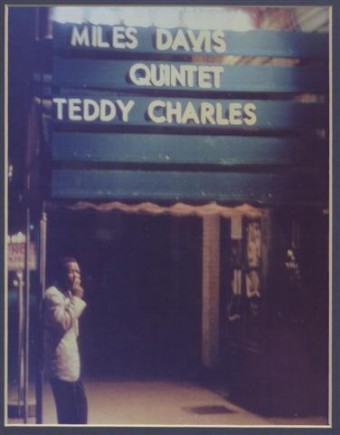
Miles Davis at the Cafe Bohemia, Manhattan, 1956

quinta-feira, 8 de setembro de 2011

The Café Bohemia

Read A Vintage Article About Café Bohemia

A June 13, 1956 Village Voice article describes the club’s origins as a jazz spot:

“First Birthday for Jazz Club That Started ‘by Accident’”

What Jimmy Garofolo, 42, knew about progressive jazz one year ago wouldn’t have filled a single bar – of music. What he’s learned since, however, was filling his bar – the Cafe Bohemia – every night last week, when the nightspot celebrated its first anniversary as a jazz club.

Seating only 100, the tiny Barrow Street club has become the only place in America with a policy of “progressive jazz only.”

“No rock ‘n roll, no vocalists, no big bands, no nuttin’ except small jazz combos,” Garofolo told The Voice Sunday [June 10, 1956]. “Once Birdland and Basin Street were the mecca of all true jazzmen; now a lot of them won’t go on the road until they’ve played the Bohemia, too. We’re a small place and we’ve given many a new outfit their first chance.”

Half a dozen LP record albums have been cut on the premises during the past 12 months, and their covers, along with others, line the walls in symmetrical rows. They include covers by the Bohemia’s two current stars – Miles Davis and Teddy Charles.

The fact that the Bohemia ever turned into a jazz club in the first place is almost accidental. Owner Garofolo, a lifelong Villager who lives across the street from his bar, explains: “For six years I tried to make the place pay, first as a bar and restaurant, then with girly shows, and then with various acts. One night I had to throw out a character who’d been drinking brandy alexanders without any money to pay for them. The next thing I knew, he was back offering to play a few weeks here to pay off his obligation – and because he wanted a regular home base from which to play when he was between engagements.

Guess Who? “Somebody told me his name was Charlie Parker and he was a saxophonist. I was pretty naive about jazz at the time and I didn’t know him from beans, but it turned out he was a big man in the jazz world.

“When I put out signs announcing he was going to play, I had a stream of people coming in wanting to know if the great Charley Parker was going to play here. It was the way they said ‘here’ that got me.”

The great Charley Parker never did get around to playing the Bohemia; he died before his engagement came up. But his prestige had done the trick – jazzophiles have jammed the place ever since.

According to Panken’s 2005 Downbeat article, Charley Parker began frequenting the Bohemia because he was staying at the apartment of poet Ted Joans, across the street. Joans is said to have coined “Bird lives!”, the phrase that caught on after Parker’s death in 1955. Joans also wrote the poem “Jazz Is My Religion.”

***


Now a local bar, this place used to be Cafe Bohemia. Cannonball Adderley made his New York debut here. He was 26 years old at the time, just left a job teaching high schools in Florida, and come to get his Masters degree at NYU. In his first night in New York, him and his brother, Nat Adderley, went down to Cafe Bohemia and played through a couple of tunes. Oscar Pettiford and Charlie Rouse were there that night, and were so impressed by the two brothers that they gave the them both jobs two nights later. The two would go on to record some of the most important jazz albums in history. ~ chasingred- TOUR OF NEW YORK'S JAZZ HISTORY, PART 1

quarta-feira, 7 de setembro de 2011

Kenny Dorham At The Cafe Bohemia 1956 [Complete 'Round About Midnight]

Recorded live at the Cafe Bohemia in New York City on May 31, 1956

Kenny Dorham (trumpet) Kenny Burrell (guitar) J.R. Monterose (tenor saxophone)
Sam Jones (bass) Bobby Timmons (piano) Arthur Edgehill (drums)

CD 1
1. K.D.'s Blues (10:41)
2. Autumn In New York (4:38)
3. Monaco [alternate take] (5:33)
4. N.Y. Theme (5:39)
5. K.D.'s Blues (9:30)
6. Hill's Edge (8:16)
7. A Night In Tunisia (9:31)
8. Who Cares? [alternate take] (4:59)
9. Royal Roost (8:41)

CD 2
1. Mexico City (6:02)
2. 'Round About Midnight (7:44)
3. Monaco (6:37)
4. Who Cares? (6:21)
5. My Heart Stood Still (7:49)
6. Riffin' (7:50)
7. Mexico City [alternate take] (6:33)
8. The Prophet (6:20)

This is part of Blue Note Records "Rudy Van Gelder Editions" series.

Mp3 320 Kps

PART 1 - 
PART 2

During the spring and summer of 1956, trumpeter Kenny Dorham recorded two studio albums with his Jazz Prophets, a small hard bop band involving tenor saxophonist J.R. Monterose and a rhythm section of pianist Dick Katz, bassist Sam Jones and drummer Arthur Edgehill. On May 31 of that year, Dorham's group performed live at the Café Bohemia with Bobby Timmons at the piano and guitarist Kenny Burrell sitting in on all but the first of four sets. Originally engineered by Rudy Van Gelder and remastered by him in 2001, Blue Note's 2002 double-disc "Complete" Dorham Café Bohemia edition combines every usable track taped during this exceptionally fine evening of live jazz. The word "understated" has sometimes been used to describe the music played by Dorham's band on this night in 1956; this is only appropriate if Dorham is compared with intense individuals like Fats Navarro or Dizzy Gillespie. Dorham's jazz was perhaps more intimate and accessible precisely because his horn had an earthier tone, almost like that of a cornet. Sometimes compared with Ted Curson, Richard Williams or Freddie Hubbard, Dorham sounded a lot like the profoundly gifted and vastly underappreciated Johnny Coles, particularly during ballads like "Autumn in New York" and "Round Midnight." There are also intimations of Miles Davis, Nat Adderley and even young Don Cherry. This music is designed for relaxing and grooving out. It will greatly assist anyone who is traveling by night or trying to make it through to the end of another day. ~ arwulf arwulf

Gracias a pepejazzy

quarta-feira, 17 de agosto de 2011

Pat Martino Live At Yoshi's (2000)

Recorded live at Yoshi's, Oakland, California from December 15-17, 2000.

Pat Martino (guitar) Joey DeFrancesco (organ) Billy Hart (drums)

Oleo (7:02)
All Blues (12:05)
Mac Tough (10:05)
Welcome To A Prayer (10:33)
El Hombre (10:32)
Recollection (8:00)
Blue In Green (7:21)
Catch (11:06)

mediafire (69Mb)
4shared (87 MB)
and from bloomysunday thanks for rapidshare links part 1 - part 2 - part 3
quarta-feira, 10 de agosto de 2011

Keith Jarrett Trio Live at Montreux 2001

Keith Jarrett
Gary Peacock * Jack DeJohnette
My Foolish Heart : Live At Montreux


Recorded live at the Montreux Jazz Festival in July 2001

Keith Jarrett - piano Gary Peacock - double-bass Jack DeJohnette - drums

Disc 1
1. Four
2. My Foolish Heart
3. Oleo
4. What's New
5. The Song Is You
6. Ain't Misbehavin'
Disc 2
1. Honeysuckle Rose
2. You Took Advantage Of Me
3. Straight, No Chaser
4. Five Brothers
5. Guess I'll Hang My Tears - Out To Dry
Encores:
6. Green Dolphin Street
7. Only The Lonely

ECM 2021 (2007)

320 KBPS
rapidshare 1 & 2
-
megaupload
1 & 2

Keith Jarrett Trio Live In Tokyo 2001

Keith Jarrett
Gary Peacock * Jack DeJohnette
Always Let Me Go

Recorded live at Orchard Hall and Bunka Kaikan, Tokyo, Japan in April 2001.

Keith Jarrett - piano Gary Peacock - double-bass Jack DeJohnette - drums

Disc 1
1. Hearts In Space 32:12
2. The River 3:34
3. Tributaries 16:18
4. Paradox 9:01
Disc 2
1. Waves 34:25
2. Facing East 14:04
3. Tsunami 14:51
4. Relay 13:00

ECM 2021 (2007)

320 KBPS
rapidshare 1 & 2
-
megaupload
1 & 2

Keith Jarrett Trio at The Royal Festival Hall 2000

Keith Jarrett
Gary Peacock * Jack DeJohnette
Inside Out

Recorded in concert at the Royal Festival Hall at the Southbank Centre in London, England on July, 26 & 28 2000

Keith Jarrett - piano Gary Peacock - double-bass Jack DeJohnette - drums

1. From The Body 21:13
2. Inside Out 21:14
3. 341 Free Ride 18:50
4. Riot 7:24
5. When I Fall In Love 7:25
(Edward Heyman, Victor Young)

ECM

rapidshare
or
megaupload


terça-feira, 9 de agosto de 2011

Keith Jarrett Trio Live in Paris 2001


Keith Jarrett
Gary Peacock * Jack DeJohnette

Whisper Not


Recorded in concert in July 5, 1999 at the Palais De Congres in Paris, France

Keith Jarrett - piano Gary Peacock - double-bass Jack DeJohnette - drums

Disc 1
1. Bouncing With Bud 7:33
2. Whisper Not 8:06
3. Groovin' High 8:31
4. Chelsea Bridge 9:47
5. Wrap Your Troubles In Dreams 5:48
6. 'Round Midnight 6:45
7. Sandu 7:26
Disc 2
1. What Is This Thing Called Love? 12:23
2. Conception 8:08
3. Prelude To A Kiss 8:16
4. Hallucinations 6:36
5. All My Tomorrows 6:23
6. Poinciana 9:11
7. When I Fall In Love 8:06

ECM

320 KBPS
rapidshare 1 & 2
-
megaupload
1 & 2

Keith Jarrett Trio At The Deer Head Inn (1992)

Keith Jarrett Trio - At The Deer Head Inn (1994) {ECM 1531}
© 2000 ECM Records | ECM 1531 / 517 720-2

Recorded September 16, 1992 at the Deer Head Inn in Delaware Water Gap, PA

Keith Jarrett piano, keyboards Gary Peacock bass Paul Motian drums

1. Solar (Miles Davis)
2. Basin Street Blues (Spencer Street Blues)
3. Chandra (Jaki Byard)
4. You Don't Know What Love Is (Raye/Depaul)
5. You And The Night And The Music (A. Schwartz/H. Dietz)
6. Bye Bye Black Bird (Ray Henderson)
7. It's Easy To Remember (R. Rodgers/L. Hart)

FSonic Link


Joe Gordon & Scott LaFaro : West Coast Days 1958/60


Joe Gordon & Scott Lafaro : West Coast Days. Live At The Lighthouse 1958/60
Label: Fresh Sound

Recorded Live At The Lighthouse, Hermosa Beach, California, September 1958 and July 31, 1960.


Joe Gordon (tp), Richie Kamuca (ts), Russ Freeman (p),
Monty Budwig (b), Shelly Manne (d). — Recorded at the Lighthouse, July 31, 1960.


01 - Our Delight (Dameron) (5:50) 

02 - Summertime / Shelly Manne Introduces Joe Gordon (Gershwin-Heyward) (11:58) 

03 - Poinciana (Simon-Lliso-Bemier) (11:44) 


Richie Kamuca (ts), Victor Feldman (p), Scott LaFaro (b), Stan Levey (d).
— Recorded at the Lighthouse, September 1958.
04 - It Could Happen to You (Burke-Van Heusen) (11:13) 

05 - Bass Blues / Commentary By Richie Kamuca (Coltrane) (15:18)

Link

Previously unreleased material from two of the most highly regarded jazz musicians of their generation, who helped the development of their respective instruments. Trumpeter Joe Gordon and bassist Scott LaFaro both died young at the peak of their creativity. Two sessions from 1958 and 1960, live at the Lighthouse.

Thanks to lafaro

domingo, 7 de agosto de 2011

Albert Ayler Live in Greenwich Village 1967

Live in Greenwich Village: The Complete Impulse Sessions (2 CDs)

FLAC (EAC rip) & mp3 @ 320 kbps
| ~950 MB FLAC; | ~ 292 MB (mp3); ~20 MB (scans)

Label: Impulse! | Recorded: 1966-1967 | This Release: 1998


Recorded at The Village Gate, New York City, on March 28, 1965, Dec 18, 1966 and Feb 26, 1967

Disc One:

1 - Holy Ghost 07:41
2 - The Truth Is Marching In 12:42
3 - Our Prayer 04:45
4 - Spirits Rejoice 16:22
5 - Divine Peacemaker 12:37
6 - Angels 09:53

Disc Two:
1 - For John Coltrane 13:40
2 - Change Has Come 06:24
3 - Light in Darkness 10:59
4 - Heavenly Home 08:51
5 - Spiritual Rebirth 04:26
6 - Infinite Spirit 06:37
7 - Omega Is the Alpha 10:46
8 - Universal Thoughts 08:22

All compositions by Albert Ayler, except Our Prayer by Don Ayler.

Personnel on Disc One #1:
Albert Ayler - tenor saxophone Don Ayler - trumpet Joel Freedman - cello Lewis Worrell - bass Sunny Murray - drums
Recorded at The Village Gate, New York City, on March 28, 1965

Personnel on Disc One #2-5:
Albert Ayler - tenor saxophone Don Ayler - trumpet Michel Sampson - violin Bill Folwell & Henry Grimes - basses Beaver Harris - drums
Recorded at The Village Vanguard, New York City, on December 18, 1966

Personnel on Disc One #6:
Albert Ayler - tenor saxophone probably Call Cobbs Jr. - piano
Recorded at The Village Vaanguard, New York City, on December 18, 1966

Personnel on Disc Two:
Albert Ayler - alto saxophone (#1), tenor saxophone (all others) Don Ayler - trumpet (except on #1) George Steele - trombone (on #8 only) Michel Sampson - violin Joel Freedman - cello Bill Folwell & Alan Silva - basses Beaver Harris - drums (except on #1)
Recorded at The Village Theatre, New York City, on February 26, 1967

mp3 CD1 - part1 - part2
mp3 CD2 - part1 - part2

Live in Greenwich Village was Albert Ayler\’s first recording for Impulse, and is arguably his finest moment, not only for the label, but ever. This double-CD reissue combines both of the Village concerts — documented only partially on previously released LPs — recorded in 1965 and 1966 with two very different groups. The Village gigs reveal the mature Ayler whose music embodied bold contradictions: There are the sweet, childlike, singalong melodies contrasted with violent screaming peals of emotion, contrasted with the gospel and R&B shouts of jubilation, all moving into and through one another. On the 1965 date, which featured Ayler, his brother Donald on trumpet, Joel Freedman on cello, bassist Lewis Worrell, and the great Sunny Murray on drums, the sound is one of great urgency. Opening with "Holy Ghost," the Aylers come out stomping and Murray double times them to bring the bass and cello to ground level in order to anchor musical proceedings to their respective generated sounds. "Truth Is Marching In" casts a bleating, gospelized swirl against a backdrop of three- and four-note "sung" phrases that are constantly repeated, à la a carny band before kicking down all the doors and letting it rip for almost 13 minutes. On the 1967 date of the second disc, the Aylers are augmented with drummer Beaver Harris, violinist Michel Sampson, Bill Folwell and Alan Silva on basses, and trombonist George Steele on the closer, "Universal Thoughts." "For John Coltrane" opens the set with a sweltering abstraction of tonalities in the strings and horns. On "Change Has Come," the abstraction remains but the field of language is deeper, denser, more urgent. Only with "Spiritual Rebirth," which opens with a four-note theme, does one get the feeling that the band has been pacing itself for this moment, and that the concert has become an actual treatise on the emotion of "singing" as an ensemble in uncharted territories. Throughout the rest of the set, Ayler\’s band buoys him perfectly, following him up through every new cloud of unknowing into a sublime musical and emotional beyond which, at least on recordings, would never be realized again. This recording is what all the fuss is about when it comes to Ayler. –Thom Jurek, All Music Guide

This set documents some of the most robust and influential fermentation that was taking place in '60s jazz around the Village in New York City. Recorded live in 1966 and 1967, Live is transcendental church music, grounded in conventional African-American spirituality as it reaches exultantly for the sky. Traditional melody-then-solos structure splits at the seams as tunes spill into collective improvisation. The band often suggests a gaggle of patriots crying out in personal jubilation but rallying together, again and again, to sing a cherished anthem anew.
Ayler and Don Cherry maintain a constant tension between simple melodicism and rapturous free blowing in their soloing. "Truth Is Marching In" makes a triumphant New Orleans-style crash, while "Divine Peacemaker" has the regal quality of the music that announces a monarch's arrival. "Angels" is a lovely, if slightly tongue-in-cheek, duet between Ayler and pianist Call Cobbs Jr. The latter's changes are fashioned after the manner of an early-20th-century fantasia, his piano sounding as though it had spent its youth in a dingy Western saloon. Ayler blows a sweet lament over Cobbs' rolling arpeggios, conjuring images of divine winged messengers stumbling tipsily onto a street corner after a hard day at the ol' salvation grind.

John Coltrane Live At The Village Vanguard (1961)


Recorded November 2 and November 3, 1961 in New York City

John Coltrane tenor saxophone/soprano saxophone Eric Dolphy alto saxophone, bass clarinet
McCoy Tyner piano Reggie Workman double bass Elvin Jones drums

Original LP release Live at the Village Vanguard, 1961 (Impulse)

01 - Spiritual (13:50)
02 - Softly As A Morning Sunrise (6:40)
03 - Chasin' The Trane (16:11)

rapidshare — p1 - p2

The complete sessions also feature

Jimmy Garrison double bass Garvin Bushell oboe, contrabassoon Ahmed Abdul-Malik oud Roy Haynes drums

The Complete 1961 Village Vanguard Recordings
megaupload — p1 - p2

Live at the Village Vanguard 1961 album by John Coltrane. One side of the original LP was devoted to "Chasin' The Trane" which has been described as one of Coltrane's most important performances.[1] In a 1966 interview, Coltrane recalled that he had "listened to John Gilmore kind of closely before I made 'Chasin the Trane'."wikipedia